Building Social Capital
Social capital is essentially the network of relationships and connections that you have formed with people by building mutual trust, sharing resources and information, and establishing goodwill. As a member of the Wake Forest community, you have already engaged in building social capital with your peers and fellow alumni, faculty from your academic area of study, and staff members from various support offices on campus. As a working professional and adult, you build social capital in various parts of your life – with colleagues, clients, neighbors, friends, community members at local organizations.
We all need people – those safe support structures – who we can turn to for advice, information, and resources, and with whom we can reciprocate those efforts. Ultimately, social capital is all about building meaningful relationships that you need now and in the future.
With networking, you’re typically reaching out to someone who you may or may not know to make an ask for something specific – maybe a job referral, for career advice, or help with connecting you to someone else. In making the ask, you’re hoping and expecting that another person will respond and deliver what it is that you’re seeking.
Relationship-building differs from networking in that your ultimate goal is to establish social capital and goodwill between you and another person. You want to build up trust and a mutual reciprocity of support. Think of it as you making deposits before taking withdrawals. The relationship isn’t based on you asking for something – instead you’re considering what you can offer first. Check out the following short video to learn more. Be sure to visit our LEARN Model: Step 4 for additional resources like this on how to build meaningful relationships.
As you consider with whom and how you want to invest in people, consider your possible future withdrawals. For example, you might need a letter of recommendation for graduate school, a job reference, or a request to get connected to someone. People in your social network are more likely to respond positively to requests from you if they feel as though you have mutually invested in the relationship.
As you build social capital, here are a few specific examples of how you can invest in other people:
- Time – Be present and make the effort to show up for other people in those moments when they need your support. The giving of your time demonstrates to other people that they are a priority to you.
- Talent or expertise – Do you have specific skills or talents that are of value to other people? Share them!
- Trust – Establishing that you’re a person who can be trusted is vital to establishing meaningful relationships. You can do this by showing up on time, following through on your commitments, and maintaining confidentiality.
- Communication – Take the time to check-in with people via text, email, or a quick message. Just reaching out to say hello, thank you, or ask how someone is doing goes a long way in building your social capital.
- Reciprocity – Don’t just be a taker. A huge part of building relationships is reciprocity, where both parties have something to offer.
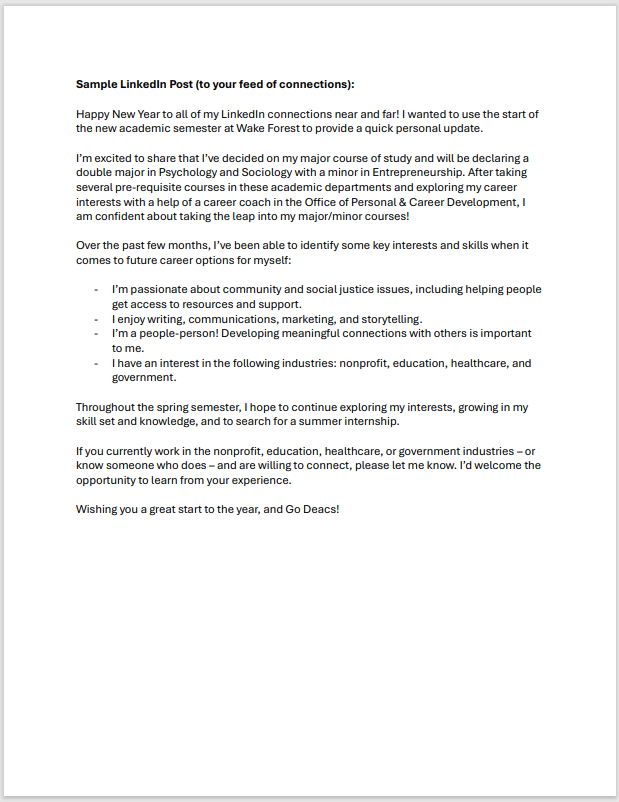
Check out this sample LinkedIn post for staying in touch with your network. By simply providing an update to the supportive people in your life, you will be investing in and maintaining these connections.
Use these samples to craft your own LinkedIn post or send an update email to your network.